2026  ·  United Kingdom  ·  Experimental,Installation,Short

The Hydra Conundrum (2026)

STATUS: Completed

The Hydra Conundrum (2026)

Watch With Labocine Pro
This film is currently not available.   
The Hydra Conundrum
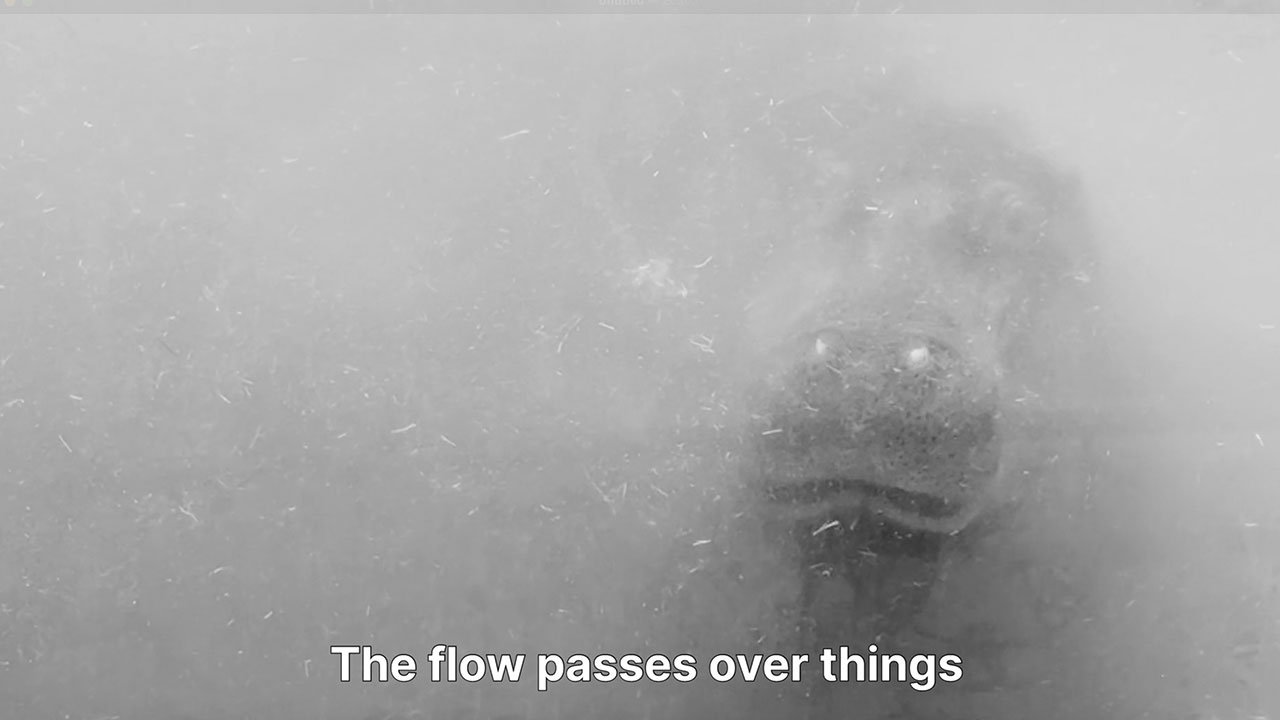
This video was produced at The Royal College of Art Graduate Diploma (Level 6) as a project outcome. Video Production by Maha Satish Voiceover credits - Maha Satish & Gabriel Mansfield Hydra is a genus of small freshwater cnidarians known for its extraordinary regenerative abilities. Found in still ponds, lakes, and slow-moving streams, these simple organisms have become important models in developmental and regenerative biology because of their apparent biological immortality. Key Facts Phylum: Cnidaria Habitat: Freshwater ponds, lakes, and slow-moving streams Size: Typically 5–20 mm in length Reproduction: Asexual budding and sexual reproduction Notable Trait: Exceptional tissue regeneration Unlike most organisms, Hydra possesses a large population of continuously renewing stem cells, enabling it to regenerate entire body structures, including its tentacles and head. If divided into fragments, each piece can reorganise itself and develop into a complete new organism. The Hydra Conundrum places this video projection of live floating Hydra at its centre, positioning the organism not simply as a biological subject but as a speculative proposition. While human hands bear the visible traces of time through ageing, injury, and adaptation, Hydra appears capable of endlessly renewing itself through stem-cell regeneration. Surrounding this living clip, the haikus in the book approach this enquiry through two distinct voices: one human and one Hydra. The poems move between experiences of deterioration and regeneration, eventually converging over the image of a petri dish in a lab. If we were offered Hydra's regenerative abilities—continuous renewal, agelessness, the capacity to endlessly recreate ourselves—what would we be willing to trade in return? Scientists remain fascinated by Hydra because its cells appear not to age in the conventional biological sense. Its regenerative process depends upon stem cells that continually divide and replace damaged tissue, maintaining the organism in a perpetual state of renewal. Beyond its biological significance, Hydra has also become a powerful metaphor for transformation, multiplicity, adaptation, and the instability of bodily boundaries. Within artistic and theoretical contexts, it often symbolises healing, mutation, survival, and the desire to transcend physical limitation. Several major universities and regenerative biology labs are activelyresearching Hydra because of its stem cells, tissue regeneration, and apparent biological immortality. Their research morphogenesis, and biological mechanisms that might inform future understandings of human ageing and healing. My investigation begins with a juxtaposition: the gradual degeneration of human tissue—particularly the hands—against the regenerative capacities of Hydra. Human hands and Hydra represent two opposing biological conditions. The human hand records time through wear, adaptation, fatigue, injury, and decline. Hydra, by contrast, appears capable of continuously renewing itself, replacing damaged tissue and recreating lost structures. Where the hand accumulates history, Hydra seems to erase it. Through this project, I want to create an opportunity for viewers to reflect upon how human bodies respond to physical decline. Rather than regenerating entire structures, we adapt. We heal imperfectly. We repurpose function. We learn to live with loss. Hydra offers an alternative biological strategy: the continual recreation of itself. The haikus emerged as a way of thinking through these questions. Rather than describing specific images or biological processes directly, they attempt to approach them through metaphor, sensation, and voice. The first five verses are written from the perspective of a deteriorating hand, expressing fragility, loss, and a longing for renewal. The following six verses shift into the imagined voice of Hydra itself, considering what perpetual regeneration might feel like from within an organism that continuously remakes its own body. The final three verses pull back further, revealing the laboratory setting of the petri dish. Here, the focus shifts toward stem-cell research and regenerative biology, prompting questions about humanity's desire to appropriate nature's regenerative mechanisms. They ask what it means to study organisms such as Hydra in pursuit of extending human capability, longevity, and control over biological limitation.

Credits

Director
Maha Satish
Writer
Maha Satish
Producer
Maha Satish

Tags

Issues